
In Forex trading, one of the most important skills you can develop is the ability to identify market trends. Trends help traders understand the direction of price movement and make better trading decisions.
Whether you are a beginner or an experienced trader, understanding trends can significantly improve your chances of success.
What Is a Market Trend?
A trend refers to the general direction in which the market price is moving over a period of time.
In Forex trading, price does not move in a straight line. Instead, it moves in waves going up, pulling back, and continuing in a direction. These movements form patterns that traders use to identify trends.
There are three main types of market trends:
- Uptrend
- Downtrend
- Sideways (Ranging) Market
1. Uptrend (Bullish Market)
An uptrend occurs when the price of a currency pair is generally moving upwards over time.
Key Characteristics:
- Higher Highs (HH)
- Higher Lows (HL)
- Buyers (bulls) are in control
This means:
- Each new peak is higher than the previous one
- Each pullback (dip) is higher than the previous dip
Diagram of an Uptrend:
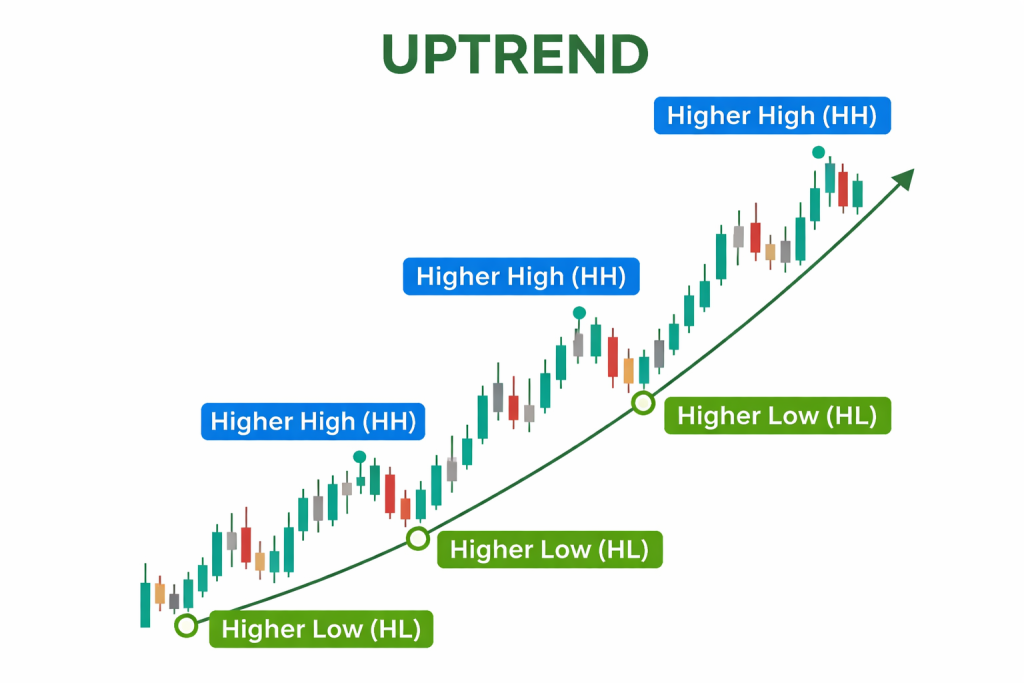
Example:
If EUR/USD moves from 1.1000 → 1.1200 → pulls back to 1.1100 → then rises to 1.1300, that is an uptrend.
2. Downtrend (Bearish Market)
A downtrend occurs when the price is generally moving downwards.
Key Characteristics:
- Lower Highs (LH)
- Lower Lows (LL)
- Sellers (bears) are in control
This means:
- Each new low is lower than the previous one
- Each bounce is weaker than the last
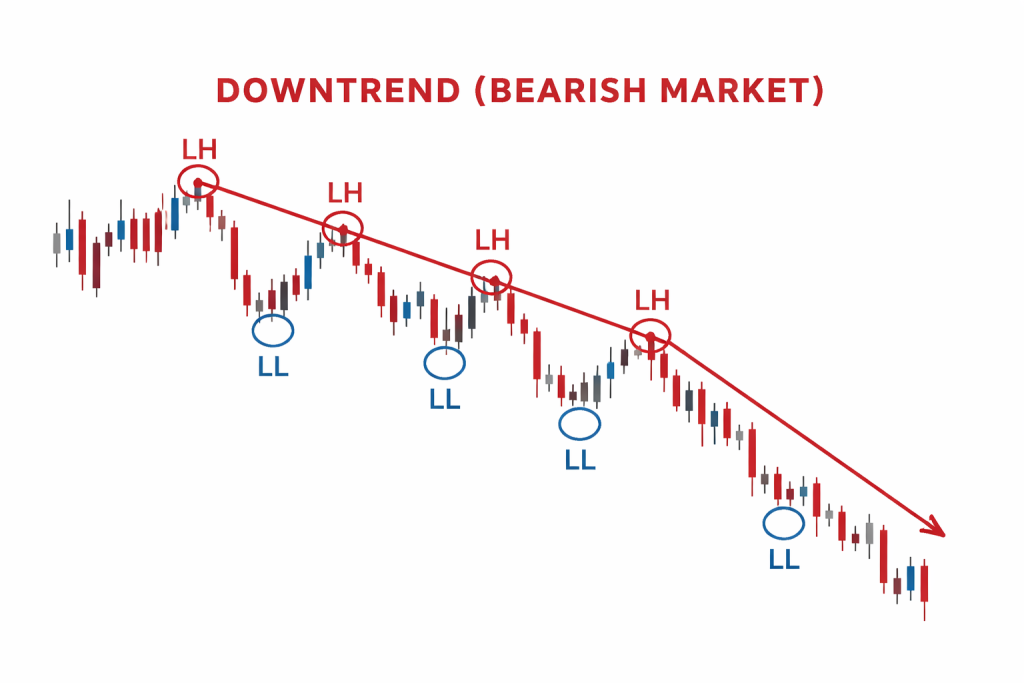
Example:
If GBP/USD moves from 1.3000 → 1.2800 → retraces to 1.2900 → then falls to 1.2600, that is a downtrend.
3. Sideways Market (Consolidation / Range)
A sideways market happens when the price is moving within a horizontal range without a clear upward or downward trend.
Key Characteristics:
- No clear direction
- Price moves between support and resistance
- Buyers and sellers are balanced
Diagram of a Sideways Market:
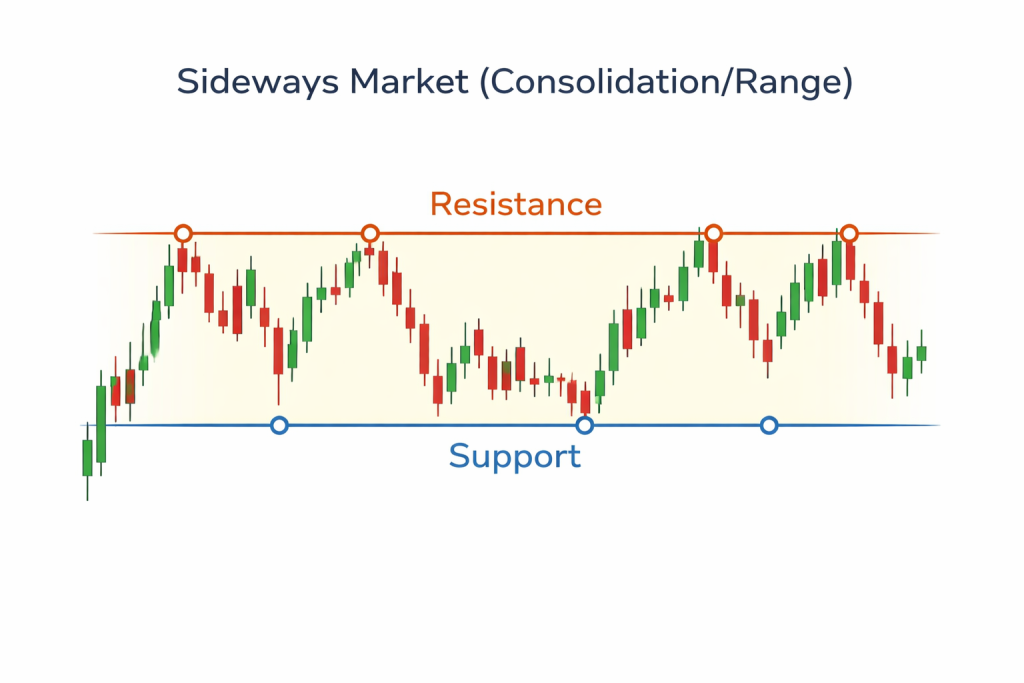
Example:
If USD/JPY keeps moving between 110.00 and 111.00 without breaking either level, it is in a range.
Why Trading With the Trend Is Important
One of the most common rules in Forex trading is:
👉 “The trend is your friend.”
1. Higher Probability of Success
Trading in the direction of the trend increases your chances of winning because you are following the dominant market force.
- In an uptrend → focus on BUY trades
- In a downtrend → focus on SELL trades
2. Avoids Fighting the Market
Trying to trade against the trend is risky.
Example:
- Selling in an uptrend = fighting buyers
- Buying in a downtrend = fighting sellers
Most beginners lose money because they try to “predict reversals” instead of following the trend.
3. Clear Entry Opportunities
Trends provide better entry points:
- In an uptrend → buy at higher lows
- In a downtrend → sell at lower highs
4. Better Risk Management
Trading with the trend allows you to:
- Place tighter stop losses
- Let profits run longer
Summary
- A trend shows the direction of the market
- Uptrend = Higher highs & higher lows (buy opportunities)
- Downtrend = Lower highs & lower lows (sell opportunities)
- Sideways market = No clear direction (trade carefully or avoid)